What is important to you in life? Is it being famous, owning a big house and a fancy new car, or maybe having a large family? Are there specific goals you would like to achieve such as writing a book, earning a college degree, owning a successful business, weighing a certain amount, etc.? Many of us have met our goals. Are you satisfied, or are you ready to tackle another one? Some of us create bucket lists of things that we feel the need to do before the end of life. People are jumping out of airplanes, surfing 10-foot waves, skiing from the highest mountaintops, etc. Do these things satisfy the ego or the spirit? The #1 goal on everyone’s list should be self-improvement, because then everything else will fall into place. I can honestly say there is nothing more fulfilling and gratifying in life than improving yourself mentally and spiritually and helping others do the same. You will have such a peace within and clearly understand that the things in life you didn’t accomplish won’t really matter.
The Devil Made Me Do It
The urge to satisfy a short-term need for pleasure can lead to long-term, negative effects on life. Do not be deceived by your thoughts and temptations of the ego. When you are being put to the test, and it is against your better judgment, you have the power within you to resist temptation. Always practice self-control and make the right choices.
Use this Tool
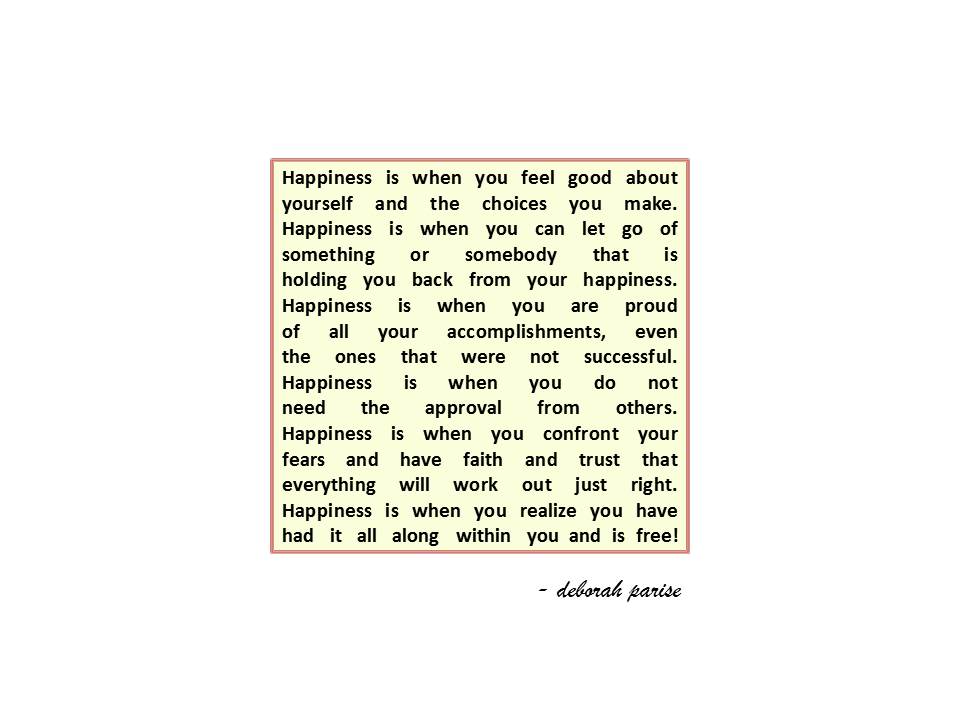
Happiness in a Box
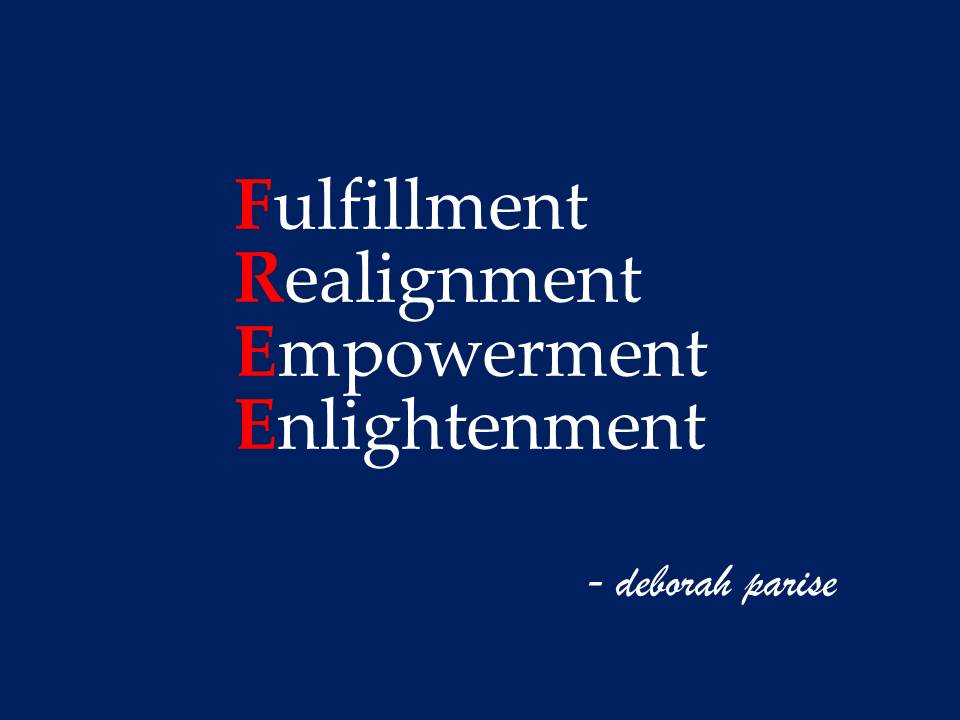
FREE
Riddle
Everyone solve this one. When asked this riddle, 80% of kindergarten kids got the answer, compared to 17% of Stanford University seniors.
- What is greater than God,
- More evil than the devil,
- The poor have it,
- The rich need it,
- And if you eat it, you’ll die?
What Are You Afraid of?
Fear is the most unpleasant, distressing, painful feeling anyone can experience. Fear is caused by worry or thought of possible danger, evil, or a threat. Fears may come from personal history and/or can be learned from experiences. Wikipedia provided the top 10 types in the U.S. by a 2005 Gallup poll and Bill Tancer’s published list in 2008:
“In a 2005 Gallup poll (U.S.A.), a national sample of adolescents between the ages of 13 and 17 were asked what they feared the most. The question was open-ended and participants were able to say whatever they wanted. The top ten fears were, in order: terrorist attacks, spiders, death, being a failure, war, criminal or gang violence, being alone, the future, and nuclear war.
In an estimate of what people fear the most, book author Bill Tancer analyzed the most frequent online queries that involved the phrase, “fear of…” following the assumption that people tend to seek information on the issues that concern them the most. His top ten list of fears published 2008 consisted of flying, heights, clowns, intimacy, death, rejection, people, snakes, failure, and driving.”
By understanding and confronting your fears (also called exposure therapy), you can gain better control of your life. You have the courage to overcome your fears. Most importantly, have faith and trust in God and in yourself that everything will be all right.
Stay Present
Sympathy vs. Empathy vs. Compassion
So I googled sympathy vs. empathy vs. compassion to learn the differences of these three words, and the first site that came up was operationmeditation.com. Below is what was provided:
Sympathy – feeling sorry for another’s hurt
Sympathy is feeling sorry for another’s hurt or pain. There is some emotional distance with sympathy – you are not experiencing the pain for yourself, rather you are saying “Isn’t it sad that this person is having a bad time”. Sometimes sympathy can tip into pity, and that is where some caution is needed. Pity is an emotion that tends to dehumanize and belittle. Most people who have a disability or other challenges will despise being ‘pitied’ as pity strips away the rich reality of their human experience and leaves just the difficulty or disability on view. For a deeper relationship and understanding, empathy is needed.
Empathy – walking in another’s shoes
Empathy takes things a little deeper – it is the ability to experience for yourself some of the pain that the other person may be experiencing. It is an acknowledgement of our shared experience as humans and recognition that we all feel grief and loss and pain and fear. You do not need to have experienced exactly the same events as the person who is suffering but you do need to have the ability to really imagine how they must be feeling in their situation. Empathy is a vicarious experience – if your friend is feeling afraid, you too will experience a feeling of fear in your body; if they are sad, you too will feel sorrow. Feeling empathy is allowing yourself to become tuned into another person’s emotional experience. It takes courage to do this but if you have ever experienced real empathy from another when you have been hurting, you will know what a gift it can be.
Compassion – love in action
If empathy is the ability to really experience some of the feelings of pain that another person is feeling, then compassion is to translate that feeling into action. You understand that your friend is feeling worried and stressed with their aging relative in hospital, so you cook the family some dinners and take their children for an afternoon. True compassion reaches out to all people, no matter whether they are your friends or not, and even to all living creatures. It is the ability and willingness to stand alongside someone and to put their needs before your own. Living a compassionate life can be learned – it is not just something that some ‘extra-good’ people are born with. Changing habits takes persistence and practice but it is achievable through the right methods. Many of the worlds’ wisest people have stated that giving to others in life is the source of the greatest contentment and life satisfaction, so there are many personal benefits to be gained as well.
Platinum Rule
When we come to know others and understand them on a deeper level, we can more accurately identify their needs and concerns. Here is what I have learned recently from an online video course taken from the Project Management Institute, Inc. entitled, “Leading with Emotional Intelligence.”
We all remember the Golden Rule from our childhoods: “Do to others as you would have them do to you.”
The Platinum Rule states this: “Do to others as they would want to have done to them.”
Regardless of how you might personally want to be treated, the Platinum Rule is more empathetic and accommodating to the other person’s needs. Not everyone wants to be treated the same way. Let go of the Golden Rule and use the Platinum Rule instead.